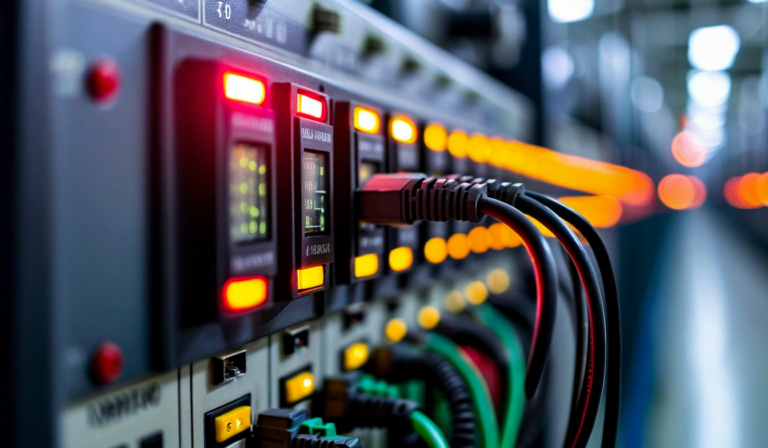
The average factory PLC was installed 12 years ago. Some are running software from the early 2000s. When manufacturers hear "AI integration," many picture a massive infrastructure overhaul — ripping out aging controllers, replacing SCADA systems, shutting lines down for weeks during migration. That picture is wrong, and it's one of the most persistent myths blocking adoption of manufacturing AI.
The truth is more practical: most legacy PLC and industrial control infrastructure is perfectly capable of coexisting with modern AI monitoring layers. The key is understanding what you actually need to do — and what you don't.
Why the Rip-and-Replace Fear Is Overblown
The fear originates from a reasonable assumption: modern AI systems need modern data infrastructure, and legacy PLCs are data silos with proprietary protocols that predate the internet. Both of those things are partially true. But the gap between them is much smaller than it appears.
Legacy PLCs — even old Siemens S7 series, Allen-Bradley SLC 500s, and GE Fanuc controllers from the 1990s — have one thing in common: they're deterministic, reliable, and continuously producing data. That data is often accessible via the same protocols that have existed for decades: Modbus RTU, Profibus, EtherNet/IP, OPC DA (the predecessor to OPC-UA). The data is there. The question is how to get it out without disrupting the control logic.
The answer, in almost every case, is passive data tap. Not an active integration that writes back to the PLC or modifies its behavior — just a listener that reads the data the PLC is already producing. This approach has zero risk to production continuity. The PLC doesn't know anything is listening. If the AI system goes offline, the PLC keeps running exactly as it always has.
The Integration Architecture: Four Layers
Layer 1: Edge gateway device. A ruggedized industrial edge computer is installed in the control cabinet or nearby panel, connected to the PLC via the existing communication interface. The edge device runs our SensorBridge connector software, which speaks the legacy protocol (Modbus, EtherNet/IP, OPC DA) and translates it to a modern, standardized data stream. This device typically costs $800–$1,500 and takes 2–4 hours to install and configure. No PLC programming changes required.
Layer 2: Secure data transport. The edge device transmits data to the Intuigence AI platform over an encrypted MQTT or HTTPS connection on whatever network infrastructure is available — plant Ethernet, WiFi, or cellular. The transport layer is one-way: data flows from the edge to the cloud. No inbound connections are opened to the plant network, which eliminates the firewall and security concerns that often delay industrial IT projects.
Layer 3: Platform ingestion and normalization. On the platform side, SensorBridge normalizes data from multiple legacy sources into a unified time-series format. This is where the translation work happens — mapping PLC register addresses to meaningful engineering variables, applying unit conversions, handling sampling rate differences between different PLCs. This configuration work typically takes 1–3 days for a moderately complex installation.
Layer 4: AI model deployment. With clean, normalized data flowing into the platform, the AI models can be trained and deployed. For predictive maintenance, we need 30–90 days of historical data to establish baseline behavior — though we can often bootstrap from existing historian data that was already being collected. Quality inspection models can be deployed as soon as sufficient labeled examples are available, typically 2–4 weeks after go-live.
What "No Line Shutdown" Actually Means in Practice
Our standard deployment process works in phases designed around the manufacturer's production schedule. The physical installation of edge gateway devices is done during scheduled maintenance windows — the brief periods between shifts or during weekend downtime when lines are already stopped. For most plants, this means a few 2-hour windows over the course of one or two weeks.
The integration configuration, data normalization, and model training all happen while production runs normally. The only dependency is data access — and passive data tap provides that without any risk to the running process.
In our last 18 deployments, average elapsed time from first site visit to first AI insights was 11 working days. Zero lines were shut down specifically for the integration. Zero PLC programs were modified.
The Honest Challenges
Integrating AI with legacy industrial infrastructure isn't perfectly smooth in every case. A few real challenges worth acknowledging:
Very old PLCs with no communication port. A small percentage of legacy PLCs — particularly older relay-ladder machines from the 1980s and early 1990s — have no digital communication interface at all. For these, AI integration requires either adding an external sensing layer (vibration sensors, temperature sensors wired separately) or upgrading the communication module, which does require a brief planned outage. In practice, this affects fewer than 10% of the PLCs we encounter.
Undocumented register maps. Many legacy PLCs were installed by integrators who no longer exist, with documentation that was lost years ago. Figuring out which register addresses correspond to which process variables requires investigation — sometimes talking to the original operators, sometimes reverse-engineering from SCADA screen configurations, sometimes careful trial and observation. This adds time but is almost always solvable.
Network segmentation. Industrial IT departments (where they exist) have often implemented strict network segmentation between OT (operational technology) and IT networks. Getting data off the production floor and to the cloud requires working through these security architectures. We've handled this with cellular-connected edge devices that bypass the plant network entirely, with VPN tunnels through approved network paths, and with air-gapped data transfer solutions for the most security-sensitive environments. None of these are blockers — they just require coordination with the IT/OT security team.
A Real Example: 20-Year-Old Allen-Bradley PLCs
One of our most instructive deployments was at a metal stamping facility running Allen-Bradley SLC 500 PLCs installed in 2003. The facility had no historian, no SCADA system, and no network infrastructure in the production area. The maintenance team had been managing a repeated hydraulic seal failure on one of their larger presses by replacing seals on a calendar schedule — roughly every 60 days whether needed or not.
We installed cellular-connected edge gateways with external vibration and hydraulic pressure sensors wired to the press. No modifications to the SLC 500. Data started flowing within a day of physical installation.
Within 45 days, the AI model had established baseline behavior and identified a correlation between hydraulic fluid temperature and seal wear rate that the calendar-based schedule had been masking. The maintenance interval wasn't 60 days — it varied from 38 to 91 days depending on ambient temperature, fluid viscosity, and cycle count. The AI model now predicts replacement need 10–14 days in advance based on actual condition, not calendar.
In the first year, scheduled seal replacements dropped from 6 to 4 events (saving two unnecessary planned shutdowns), and unplanned failures dropped from 2 to zero. Not bad for a 20-year-old Allen-Bradley.
The Bottom Line for Legacy Infrastructure
If you've been deferring AI investigation because you believe your legacy infrastructure makes it impractical, reconsider. The integration work is real but it's bounded — typically 1–3 weeks of configuration work — and it almost never requires modifying your PLC programs or shutting down production. The constraint is data access, and passive tap architectures solve that with minimal risk.
The manufacturing technology that will be most impactful over the next five years isn't a replacement for your legacy control systems. It's a layer of intelligence built on top of them.